


Why Does My Grout Stay Dirty Even After Mopping?
Have you ever mopped your tile floors, only to notice that the grout still looks dark or dirty? You're not alone. This is a common problem, especially in kitchens, hallways, and other areas that see a lot of foot traffic.
The good news is that dirty-looking grout doesn't necessarily mean your floors aren't being cleaned. In many cases, the problem is that ordinary mopping isn't enough to remove the dirt trapped inside the grout.
Let's look at why this happens, what you can do about it, and when professional tile and grout cleaning may help.
Why Does Grout Stay Dirty Even After Mopping?
One of the biggest reasons grout stays dirty is that it's porous. Unlike the smooth surface of many ceramic and porcelain tiles, grout has tiny pores and an uneven texture that allow dirt to settle into it over time.
Mopping can remove loose dirt and surface grime, but it often doesn't provide enough agitation to loosen soil that's embedded deeper in the grout. As a result, the tile itself may look clean while the grout lines remain dark.
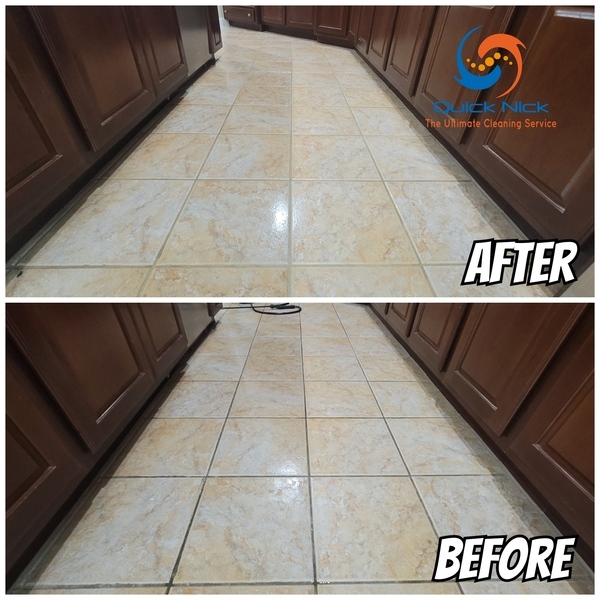
This is especially noticeable in high-traffic areas, such as kitchen floors, entryways, and walkways. Dirt tracked in from outside gradually builds up in these areas, and regular mopping may not remove all of it.
The type of tile can also make a difference. Smooth ceramic and porcelain tile is generally easier to wipe clean, while textured tile has grooves and indentations where dirt can collect. Some natural stone surfaces also require more specialized care, depending on the type of stone and its finish.
Can Mopping Make Grout Look Worse?
Mopping is an important part of routine floor maintenance, but the way you mop can affect how clean your floors stay.
For example, using too much soap or cleaning solution can leave a film on the floor. This residue may attract or hold onto dirt, causing the surface to look dull or dirty again sooner.
Using dirty mop water can also spread soil around rather than remove it effectively. And if you mop without sweeping or vacuuming first, loose dirt can be pushed across the floor and into the grout lines.
These habits don't necessarily cause permanent damage, but they can make it harder to keep tile and grout looking clean.
For better results, remove loose dirt before mopping, use an appropriate amount of cleaner, and avoid leaving excess cleaning solution on the floor.
What Cleaning Products Should You Avoid on Tile and Grout?
Using the wrong cleaning products can create additional problems, particularly on certain types of tile.
Avoid vinegar and lemon juice on acid-sensitive surfaces. These acidic cleaners can etch natural stone such as marble and limestone. Repeated use on susceptible surfaces can leave them rougher and more vulnerable to staining. Acidic products may also affect some grout and other flooring materials, so it's important to choose a cleaner suited to your specific floor.
Be careful with soap-based cleaners. Products that leave a heavy residue can make floors look dull and allow dirt to accumulate more easily. Using more cleaner doesn't necessarily mean you'll get a better result.
Avoid bleach and other harsh products unless they're specifically appropriate for your flooring. Some chemicals can affect grout color, damage certain finishes, or create other problems when used incorrectly.
For routine maintenance, a neutral, non-acidic cleaner that's suitable for your tile and grout is often a good choice. Always follow the product directions and check the flooring manufacturer's recommendations, especially if you have natural stone.
How Can You Clean Dirty Grout Yourself?
If your grout is starting to look dirty, there are a few steps you can take before considering professional cleaning.
Sweep or vacuum first. Remove loose dirt, dust, and debris so you're not pushing it around while cleaning.
Apply a suitable cleaner. Choose a neutral, non-acidic product that's safe for your particular tile and grout.
Allow the cleaner to work. Follow the product's directions for how long it should remain on the surface. Don't let it dry if the instructions say to keep it wet.
Scrub the grout. Use an appropriate brush with plastic bristles to loosen embedded dirt. Pay extra attention to darker areas and high-traffic grout lines.
Rinse or wipe away the residue. Remove the loosened soil and cleaning solution according to the product directions, and dry the surface as appropriate.
This approach can help with routine maintenance and lighter buildup. However, heavily soiled grout may require more work than a homeowner can reasonably manage with household cleaning tools.
Be especially careful with natural stone and delicate finishes. Test products in an inconspicuous area and follow the manufacturer's care instructions.
Why Is Professional Tile and Grout Cleaning More Effective?
When dirt has built up inside grout over time, professional cleaning can often achieve a much better result than mopping alone.
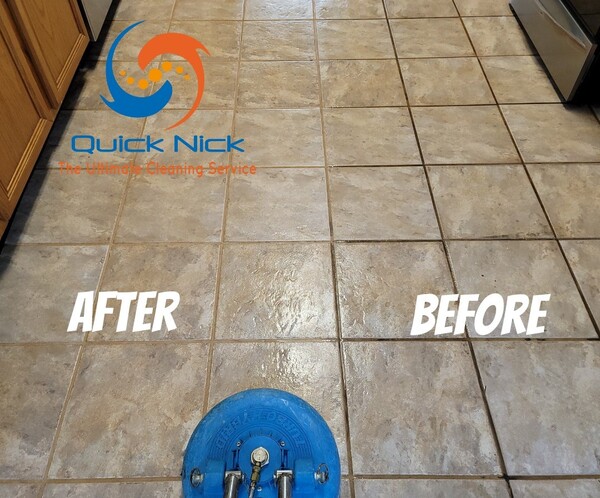
At Quick Nick's Cleaning, our process involves applying a specialized tile and grout cleaning solution and allowing it time to work. We then scrub the tile and grout to loosen the embedded soil.
Next, we use a specialized tile and grout cleaning tool connected to our truck-mounted equipment. The tool sprays hot water across the floor while immediately extracting the water, cleaning solution, and loosened dirt.
You can think of it as a contained, high-pressure cleaning system designed specifically for hard flooring. Instead of simply wiping the surface, it throughly rinses, and extracts to remove soil more effectively.
The exact approach depends on the type and condition of the flooring. Natural stone and certain specialty surfaces may require different products or methods to avoid damage.
Can Professional Cleaning Restore Grout to Its Original Color?
Sometimes, the difference is dramatic. Grout that has gradually darkened from everyday foot traffic can look significantly brighter once the embedded dirt is removed.
However, results vary from one floor to another.
Light-colored grout tends to show dirt more clearly, so improvements may be easier to notice. Darker grout can hide more of the buildup, making the difference less obvious.
It's also important to understand that dirt and permanent discoloration aren't the same thing. Professional cleaning can remove soil, but it can't always reverse discoloration that has developed over time. Depending on the cause, age, and condition of the grout, some staining or color changes may remain.
Grout can also look different while it's wet, so it's best to wait until the floor has dried before judging the final result.
In most cases, professional cleaning makes the grout look noticeably brighter and the floor look fresher overall, even if the grout doesn't return completely to its original color.
Should You Seal Your Grout After Cleaning?
Grout sealing can help reduce the absorption of certain liquids and make routine maintenance easier, depending on the grout type and sealer used. However, sealer isn't a permanent fix, and it doesn't keep grout from getting dirty.
Over time, dirt can still build up in grout, even when it's been sealed. Sealers can also wear down with regular foot traffic and cleaning, so they may not provide the same level of protection indefinitely.
Another mistake to avoid is applying sealer over dirty grout. If the grout hasn't been properly cleaned and prepared, sealing can lock in the appearance of existing soil and make it much harder to address later.
Even when grout is sealed correctly, it may eventually need a deeper cleaning. If an existing sealer is preventing the cleaning solution from reaching the embedded dirt, the sealer may need to be removed before the grout can be thoroughly cleaned. This typically makes the job more involved and more expensive than standard tile and grout cleaning alone.
If you're considering sealing your grout, make sure the floor is properly cleaned first and that the grout is suitable for the chosen sealer. Follow the product's preparation and drying instructions, and remember that regular maintenance is still necessary to keep your grout looking its best.
How Can You Keep Your Grout Cleaner for Longer?
A few simple habits can help slow the buildup of dirt between professional cleanings:
Remove shoes at the door. This helps reduce the amount of dirt tracked across your floors.
Sweep or vacuum regularly. Removing loose soil before mopping helps prevent it from collecting in grout lines.
Clean up spills and accidents promptly. This can help prevent certain substances from staining the grout or leaving residue.
Use the right cleaner. Choose a suitable neutral, non-acidic product and avoid excessive amounts that may leave a film.
Scrub when necessary. Periodic brushing of grout lines can help remove buildup that routine mopping leaves behind.
For many homes, professional tile and grout cleaning every 6–12 months is a good general guideline. Homes with pets, children, or heavier foot traffic may benefit from more frequent cleaning, while well-maintained floors with less traffic may need it less often.
When Should You Consider Professional Grout Cleaning?
If your tile looks reasonably clean but the grout stays dark no matter how often you mop, it may be time to consider professional cleaning.
The same is true if you have stubborn buildup in your kitchen or walkways, textured tile that's difficult to clean, or grout lines that have gradually become darker over the years.
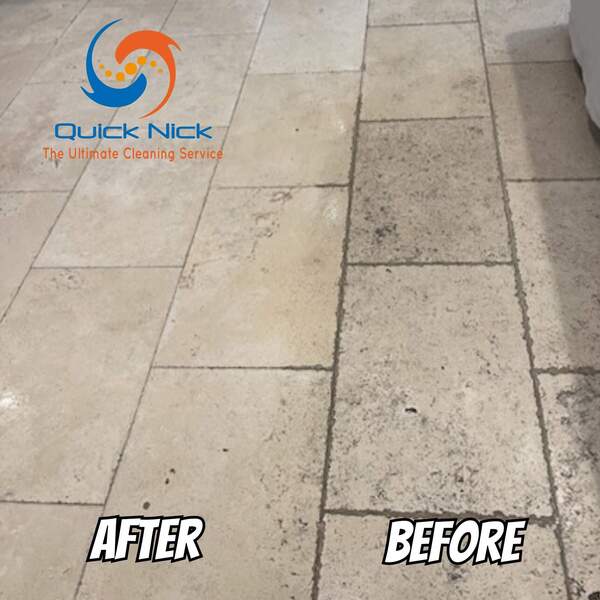
Professional cleaning won't correct every type of staining or permanent discoloration, but it can remove embedded soil that ordinary maintenance often leaves behind. For many homeowners, it makes a noticeable difference without the time and effort of scrubbing every grout line by hand.
Final Thoughts
If your grout stays dirty even after mopping, the problem may not be your cleaning routine. Grout is porous, and dirt can settle into it in ways that ordinary mopping can't fully address.
Sweeping before mopping, choosing the right cleaning products, and scrubbing when necessary can help keep buildup under control. When dirt becomes more deeply embedded, professional tile and grout cleaning can often restore a much brighter, cleaner appearance.
If you've tried everything and your grout still looks dirty, a professional cleaning may be the next step.