


Why Does My Carpet Smell Bad After Professional Cleaning?
Having your carpets professionally cleaned should leave your home feeling fresher, so it can be frustrating when an unpleasant smell appears afterward. Sometimes it's a temporary odor that goes away as the carpet dries. Other times, it can point to an underlying issue that wasn't noticeable before cleaning.
The important thing is identifying what kind of smell you're dealing with. A musty, wet-dog-like odor has different potential causes than the smell of pet urine. Understanding the difference can help determine what's happening and what needs to be done to correct it.
Professional carpet cleaning involves more than simply applying water and extracting dirt. The amount of moisture used, the effectiveness of the extraction process, and the condition of the carpet can all influence the final results.
Let's look at some of the most common reasons carpets smell bad after professional cleaning and what homeowners can do about them.
1. Excess Moisture and Slow Drying
One of the most common reasons a carpet develops a musty or wet-dog-like smell after cleaning is that it was left wet for too long.
Professional carpet cleaning typically involves hot water extraction (HWE), which uses a combination of cleaning solution, hot water, and extraction to remove embedded soil from carpet fibers.
During this process, a cleaning solution is applied to loosen dirt, oils, and other contaminants that have accumulated in the carpet. Hot water is then used to rinse the fibers while powerful vacuum suction extracts the water along with the suspended soil and cleaning residue.
When performed properly, a significant amount of moisture should be removed during the extraction process. However, some moisture will naturally remain in the carpet fibers and backing, which is why drying is still necessary.
The effectiveness of the extraction process plays a major role in how quickly a carpet dries. Equipment with strong vacuum performance, properly functioning cleaning tools, and sufficient extraction passes help recover more water during cleaning. If too much moisture is left behind, the carpet will naturally take longer to dry.
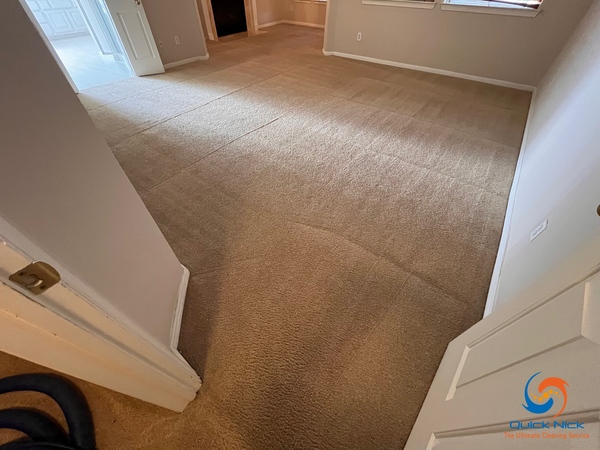
Under normal conditions, a carpet can take up to 24 hours to dry completely, depending on the amount of moisture used, carpet thickness, humidity, and airflow. Several simple things homeowners can do can help speed up this process.
How to Help Your Carpet Dry Faster
Turn on ceiling fans: Overhead fans help circulate air throughout the room and improve airflow across the carpet.
Use a floor fan or blower: Directing airflow across the carpet can significantly reduce drying time by helping moisture evaporate more efficiently.
Run your air conditioning: Keeping the temperature between 68–75°F can help maintain a comfortable drying environment. Air conditioning also helps remove moisture from the air as it operates.
Use a dehumidifier: Reducing indoor humidity helps moisture evaporate from the carpet more efficiently.
The goal is to reduce humidity and increase airflow. These steps can make a noticeable difference in how quickly your carpet dries.
If your carpet is taking significantly longer than 24 hours to dry, that's generally longer than it should under normal conditions. This can happen when too much moisture is left behind during cleaning, the carpet is particularly thick, or there's inadequate airflow and high humidity.
When carpet stays damp for an extended period, it can develop an unpleasant musty or wet-dog-like smell. Prolonged moisture can also create conditions that encourage microbial activity, particularly when organic material is present.
This is one reason proper extraction is so important. The more moisture that can be recovered during cleaning, the less the carpet has to release into the air while drying.
2. Old Pet Urine Can Reactivate After Cleaning
Another common reason a carpet smells worse after professional cleaning is pre-existing pet urine contamination.
When a pet has an accident, urine doesn't always stay near the surface of the carpet. Depending on the amount and how long it sits, it can soak through the carpet fibers, backing, and into the padding underneath.
Even if the carpet no longer smells before cleaning, urine contamination may still be present below the surface.
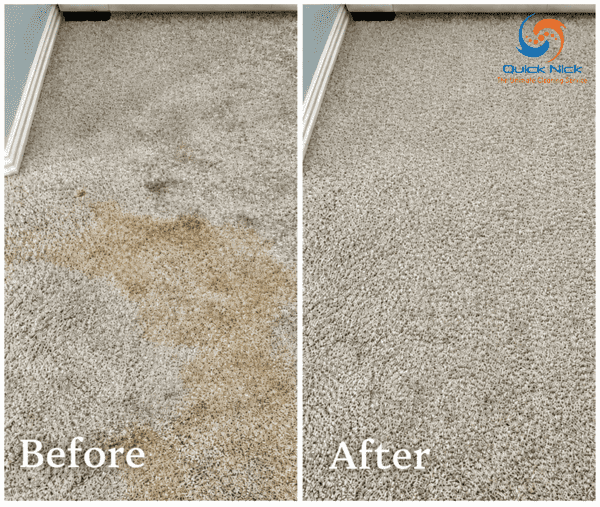
One reason this happens is that urine contains several different compounds, including urea, uric acid, and other organic materials. As urine dries, some of these compounds remain behind in the carpet. Over time, bacteria can break down components of the urine and contribute to the unpleasant odors associated with old pet accidents.
Some of these deposits can remain in the carpet even after the visible stain has disappeared.
When moisture from the cleaning process reaches those areas, it can reactivate old urine odors. In some cases, the smell can become noticeably worse than it was before cleaning.
Changes in humidity can also cause previously unnoticed urine odors to become more noticeable. This is why some homeowners experience recurring pet odors even after the carpet has been cleaned.
This often isn't noticeable immediately. The fragrances from cleaning products may temporarily mask the odor, and it may not become obvious until the carpet dries and those fragrances dissipate.
How Can Pet Urine Odors Be Prevented?
There are a couple of things that can help reduce the chances of this happening.
First, an enzyme pre-treatment specifically designed for pet urine can be applied at the beginning of the cleaning process. These products use biological or enzymatic activity to help break down certain organic compounds associated with urine and other biological contaminants.
They need adequate dwell time to work properly, which is why they're generally applied before the main extraction process. Allowing the product to remain in contact with the affected area gives it more time to work before the cleaning solution and contaminants are extracted.
Second, making additional dry passes during extraction helps remove as much moisture as possible from the carpet. This is especially important when cleaning areas with known pet urine contamination.
While these steps can help, they aren't a guarantee that every odor will disappear. If urine has penetrated deep into the padding, treating the carpet fibers alone may not be enough.
In some situations, a more targeted treatment may be necessary to address contamination underneath the carpet.
For a more detailed explanation of pet urine removal, see our guide: How to Remove Pet Stains and Odors From Carpet: A Professional Carpet Cleaner’s Guide.
3. An Underlying Problem With the Carpet Padding
Sometimes a carpet can develop an unpleasant odor after cleaning even when the technician has done everything correctly.
This can happen when there's an existing problem underneath the carpet that wasn't noticeable beforehand.
For example, old pet urine may have soaked through the carpet backing and into the padding. Previous spills, water damage, or other moisture problems may also have contributed to odors beneath the carpet.
Carpet padding is particularly important because it's a porous cushioning material located between the carpet and the subfloor. Unlike the carpet fibers, which are exposed to the cleaning equipment, the padding is not directly cleaned during a standard hot water extraction process.
It's important to understand that standard hot water extraction is designed to clean the carpet fibers. It should not saturate the carpet padding.
Although some moisture can pass through the carpet backing, a properly performed cleaning should not leave the padding excessively wet.
Because of this, if urine or another odor source has already reached the padding, cleaning the carpet alone may not resolve the problem. The carpet may look much cleaner afterward, but the odor can remain because its source is underneath.
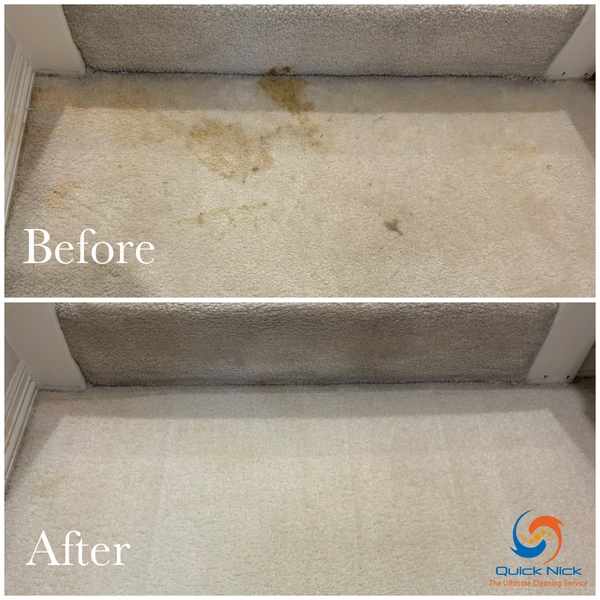
Another situation worth mentioning is previous water damage or flooding. If a carpet has been exposed to significant amounts of water, the padding underneath can become heavily saturated. In these situations, simply cleaning the carpet fibers won't resolve the problem.
Carpet padding is highly absorbent, and when it becomes heavily contaminated or remains wet for an extended period, it can develop persistent odors. If the padding was severely affected by flooding, it will likely need to be replaced rather than simply cleaned.
Even if the padding has already dried, that doesn't necessarily mean the problem is gone. Odors can remain from contaminants left behind during the water damage, particularly if the water wasn't clean. If the smell is coming from the padding or subfloor, standard carpet cleaning won't eliminate the underlying source of the odor.
In some cases, moisture from cleaning can also bring previously deposited contaminants closer to the carpet surface through a process called wicking. This occurs when moisture moves through the carpet fibers and backing, carrying dissolved contaminants with it as the carpet dries.
This can cause an odor or even a previously removed-looking stain to reappear.
In these situations, additional treatment may be necessary. Depending on the severity and location of the contamination, the carpet may need to be lifted so the padding and subfloor can be inspected and treated.
If the padding is heavily contaminated, replacing it may be the most effective solution.
This is also why an odor appearing after cleaning doesn't automatically mean the cleaning company did something wrong. Sometimes the cleaning process simply makes an existing issue more noticeable.
4. Are Any Odors Normal After Professional Carpet Cleaning?
Not every smell after cleaning is necessarily a sign of a problem.
One example is wool carpet. Wool has a naturally distinct smell when it gets wet, and that smell can become more noticeable during cleaning. This is related to the natural properties of wool fibers and is generally nothing to be concerned about.
Fortunately, this smell should become less noticeable as the carpet dries.
Certain cleaning products can also have a strong fragrance. This is especially true of some products used to treat pet urine and odors.
Depending on the product, these fragrances may remain noticeable for a little while after cleaning. They should gradually dissipate as the carpet dries and the room is ventilated.
It's also important to distinguish between the smell of a cleaning product and the smell of an odor that was already present in the carpet. Sometimes a fragrance can temporarily mask an existing odor rather than eliminate its source.
However, a persistent musty smell or noticeable urine odor shouldn't simply be dismissed as a normal part of the cleaning process.
If the odor remains after the carpet has dried, it's worth finding out what's causing it.
5. What Should You Do If Your Carpet Smells Bad After Cleaning?
If your carpet still has an unpleasant odor after it has completely dried, the first thing I'd recommend is contacting the company that cleaned it.
There are several possible explanations, and speaking with a professional can often help identify the issue much faster than trying different cleaning products yourself.
Many professional cleaning companies will also be willing to send someone back out to inspect the carpet and help resolve the problem.
The appropriate solution will depend on the type and source of the odor.
For example, if the smell is musty and related to excessive moisture, the carpet may need additional attention to address the drying issue. Improving airflow and removing excess moisture can help, but it's also important to determine why the carpet took so long to dry in the first place.
If it's a urine odor, a dedicated enzyme pre-treatment specifically designed for pet urine may be necessary. The affected areas may need targeted treatment rather than another general carpet cleaning.
If the odor is coming from contamination in the padding, however, another standard carpet cleaning may not solve the problem. The underlying source will need to be addressed. Depending on the severity, this could involve lifting the carpet, treating the subfloor, or replacing contaminated padding.
It's also a good idea to avoid applying additional household cleaners or deodorizing products before the carpet has been inspected. Mixing different cleaning chemicals or adding more product can make the situation harder to diagnose and may leave additional residue behind.
The important thing is not to assume every odor has the same cause. Identifying where the smell is coming from is the first step toward finding the right solution.
Final Thoughts
A bad smell after professional carpet cleaning can be frustrating, but it doesn't always mean something went wrong during the cleaning process. Sometimes the issue is excessive moisture, while other times the cleaning process brings an existing problem, such as old pet urine in the padding, to the surface.
The best approach is to identify the type of odor, allow the carpet adequate time to dry, and contact your cleaning company if the smell persists.
A properly performed cleaning should leave your carpet looking and smelling fresher. When it doesn't, finding the source of the odor is the first step toward getting the results you expected.